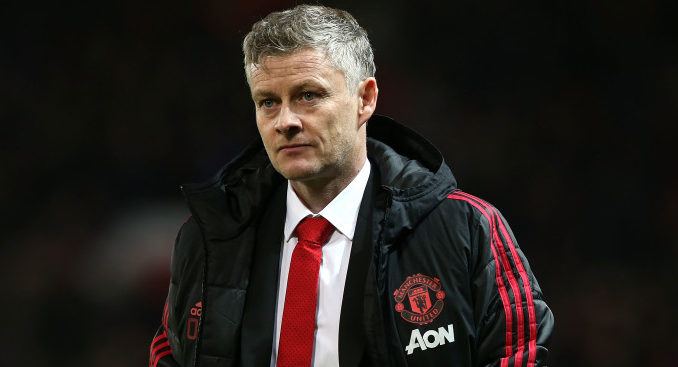
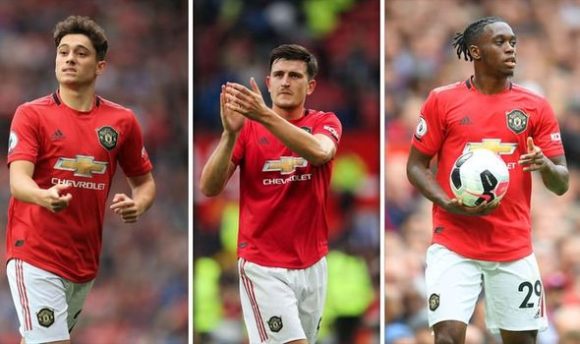
One good result nevermade an entire season, but there is a crackle of excitement in the air at OldTrafford. From the very moment that young Daniel James scored, to put ManchesterUnited 4-0 up against Chelsea at Old Trafford back on 11 August, there werenotable differences between this Manchester United team and the world-wearyapologists of 2018/19’s limp end.
For one thing, Marcus Rashford lookedlike a man reborn in the final third, ensuring that Chelsea got preciselyzero rest. Flanked by Martial and James, he was a breath of fresh air comparedto Romelu Lukaku, who had spent much of his Old Trafford endgame as a shadow ofhis former self, being borderline immobile – and utterly anonymous – when thegoing was tough.
The defence also seemed far more composed, with Harry Maguireshowing exactly why he commanded such a hefty fee for his summer transfer fromLeicester. On early evidence, Aaron Wan-Bissaka has also settled well withinthe squad, and offers the degree of energy that positional elder Ashley Youngcan no longer consistently produce.
Though title talk is still somewhat farfetched at this stage,United cannot fail to improve on last season’s showing if they continue toemulate their opening day performance throughout most of the season. A top-fourfinish is certainly attainable, and once the Red Devils are back in theChampions League, the Old Trafford faithful will once more feel qualified tohope for a return to the glorious 1990s.
Indeed, the league title win of 1992/93 that started United’searly monopoly over the Premier League came after a much longer wait fortop-flight glory than the one currently being endured. The 26-year gap thatseparated their seventh and eighth historic league titles seemed more like 26centuries, but it was well worth the wait, with further glories forthcoming –culminating in unforgettable drama at the Nou Camp, with thatunforgettable Champions League triumph against Bayern Munch in 1999.
Mourinho vs Solskjaer
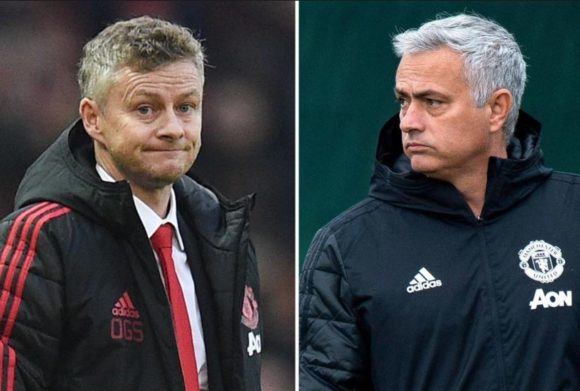
The successes continued into the new millennium, up until SirAlex Ferguson left the club in 2013, but trophies have been a lot rarer sincethen. Naturally, many United fans thought that Jose Mourinho would bring thegood times back to the club but that simply didn’t happen.
Clearly a man who will either be loved or loathed by players inthe dressing room, Mourinho’s former charm and charisma was conspicuous in itsabsence during his spell at Old Trafford. That lack of personal flair was alsoreflected in his struggle to fit square pegs into round holes, during his timeat the home of the 13-time Premier League winners.
Paul Pogba’s signing, for instance, was a classic ‘bustedflush’, with the Frenchman never truly finding his best role in a side that wasduty-bound to play with greater tempo than his former club Juventus. One yearlater, the signing of the aforementioned Lukaku – for a similar price to Pogba– proved effective only in the short term.
While Ole Gunnar Solskjaer has been given the same high-spendingopportunities, he has instead chosen to invest in players with the foresight tobuy a vision, built on a foundation of historical success. Such players neednot necessarily be superstars, but the likes of Maguire, Wan-Bissaka and Jameshave not yet become ‘marketing tools’ like Pogba, wrapped up in their own hype.
Though successful in the Premier League, Solskjaer is also muchmore of a realist than Mourinho. Having played under Sir Alex Ferguson, heknows the value of straight-talking honesty, and this marries well with hisefforts to tip the balance of stardom vs camaraderie drastically in favour ofthe latter.
In enjoying a greater sense of unity, with the only sacrificebeing a £75m passenger, the squad will ultimately be happier. The first sign ofthis is a greater sense of urgency in their play, which will also ease thetransition of more youth players – such as Mason Greenwood and Tahith Chong –when the time comes for their more frequent involvement in first-team matters.
The Legends who Lived and Breathed United
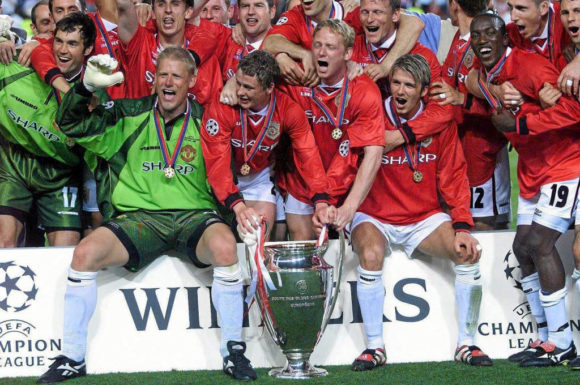
Solskjaer’s self-evident endeavours to give youth players a chance mirror Ferguson’s own values, as he reacted to Manchester United’s trophyless 1994/95 season by utilising the ‘Class of 92’ with greater intensity. After an underwhelming start, that decision would soon be vindicated. A young, new-look United famously took just three months to erase a 12-point deficit to Newcastle in 1995/96, going on to do something of almost the same magnitude to Liverpool the following season.
Having joined United as a player that same season, Solskjaerwill also undoubtedly appreciate the galvanising effect of the team’s spine –both now and in glory days past. In goal, Peter Schmeichel was the man of the1990s, while Edwin van der Sar’s clean sheets were priceless, as United resumedcontrol of the league in the later 2000s, after a period of dominance fromLondon’s ‘big two’.
While the stats show that David de Gea unquestionably endured anightmare end to 2018/19, there were undoubtedly mitigating circumstances atplay, and he could easily end up as United’s most improved player come spring2020.
In defence, the partnership of Steve Bruce and Gary Pallisterwas crucial towards United’s early successes in the Premier League, and itstood as the bar for greatness for a long time, until Ferdinand and Vidicpartnered for United to the same great effect years later. Harry Maguire’saerial presence reminds a lot of United fans of the same mastery Vidic onceboasted, but again, one promising debut never justifies comparisons to therock-solid Serb, though they do already exist.
While Maguire can grow as a defensive all-rounder, one assetthat Man United remain short of is leadership in the defensive half of thepitch. Accomplished a leader though Vidic was, the one that a comfortablemajority of United fans will toast as the immovable king of the pitch is RoyKeane.
A midfield general with even half of Keane’s deadly venom wouldautomatically see United’s title odds tumble, but such a figure is anincreasingly rare one in the current era.
What it Means to Play for United
In the last few years, United haven’t been the team thateveryone fears, and they’ve not had the culture of success many of theiryounger fans once took for granted. However, nothing has changed in terms ofwhat it means to play for the club.
Even during the aforementioned barren spell without a top-flighttitle, the core values of the club never changed. Any man who cherishesbrotherhood, endeavour and fearlessness – while combining those cornerstonevalues with raw skill and talent – has always been a natural fit for the RedDevils.
Given how he spent this summer’s transfer budget, and utilisedthe club’s pre-existing muscle to acquire the likes of Wan-Bissaka and Maguire,Solskjaer evidently cherishes those values to the same degree of the man thatintroduced him to English football more than two decades ago. Again, thiscannot fail to reignite a collective sense of belief that United’s next titlewill most certainly not waitanother 26 years.
Be the first to comment